SÜMEG
Sümeg and it’s region belongs to the cultural heritage of the Hungarian nation which owns 1100 years history. More than 1500 castles, fortresses and manor houses have been built over the centuries.
First of all, let me introduce the town, where we are now:
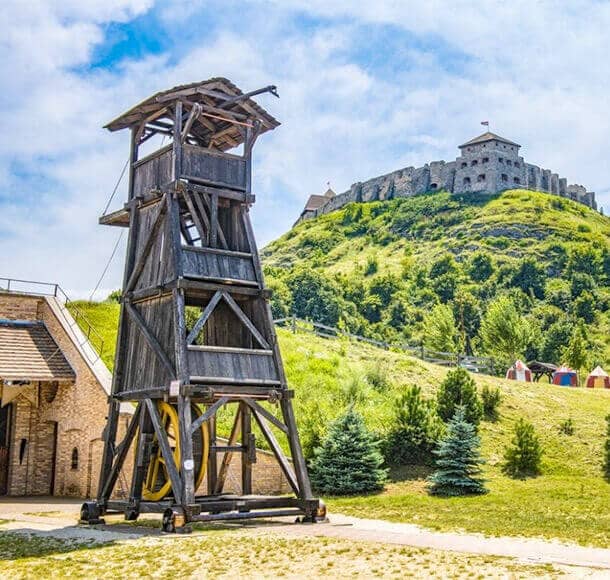
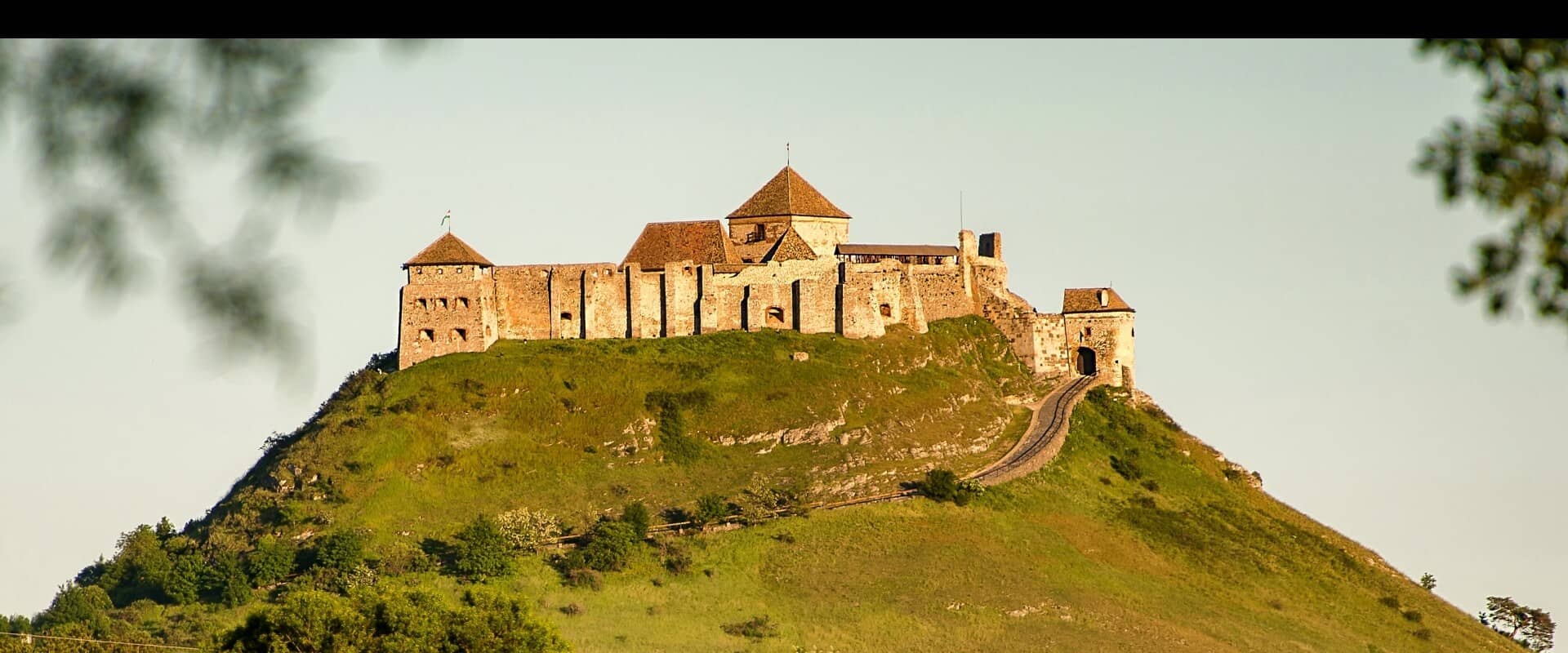
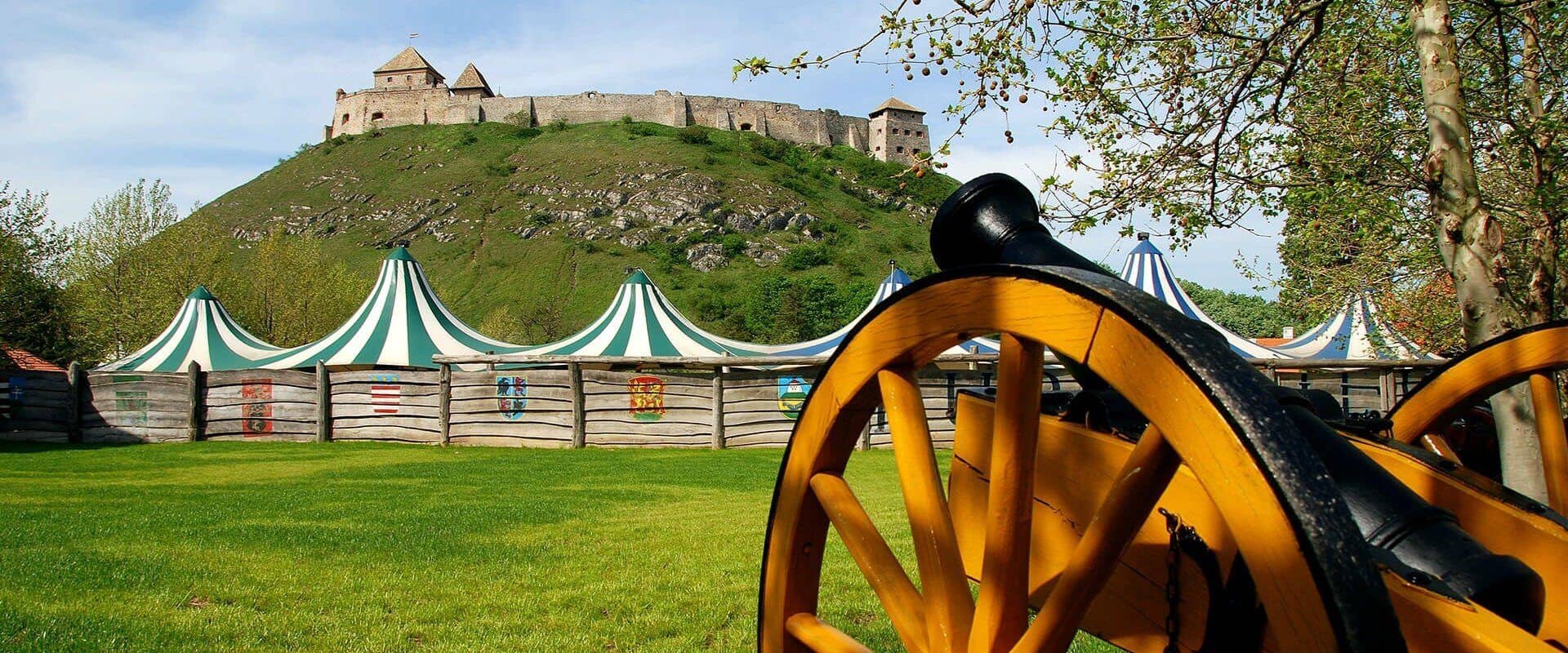
Sümeg is one of the gates to Lake Balaton, it is famous for it’s castle which rises 87 metres over the town.
It was a populated area from ancient times. The foundation of an excavated Paleo-christian basilica prove that the area has been inhabited countinously. Bronze age tombs, axes, other tools, funeral urns and the traces of a village from the late Bronze age attest this fact.
Here can you see some sights of the town:
Lefts from me there is the Franciscan church and monastery
which was built in the middle of the 17th century, and it is famous from it’s Pieta statue. According to the local tradition it was happened a lot of wonders over the centuries thank the statue.
In front of there is the other church of the town. It is the Roman Catholic parish church, it was built 100 years later. It is famous from it’s frescos, painted by Franz Anton Maulbertsch. He was a famous renaissance painter at this time.
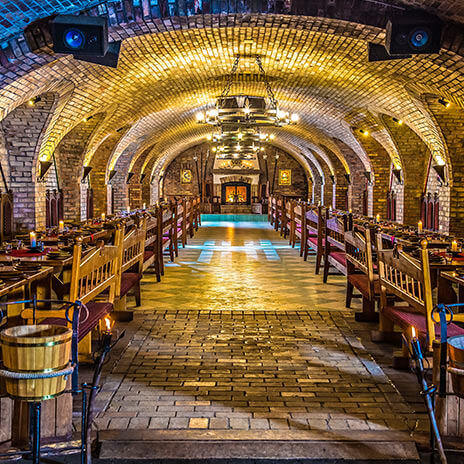
And last, over there -under the castle- you can see the Baroque Episcopal Palace, the summer residance of the bishops of Veszprem, which was built in the middle of the 18th century too. It is not to visitable but it’s cellar is a wine museum and it is wide open for visitors.
And now let me introduce the castle with some practical informations:
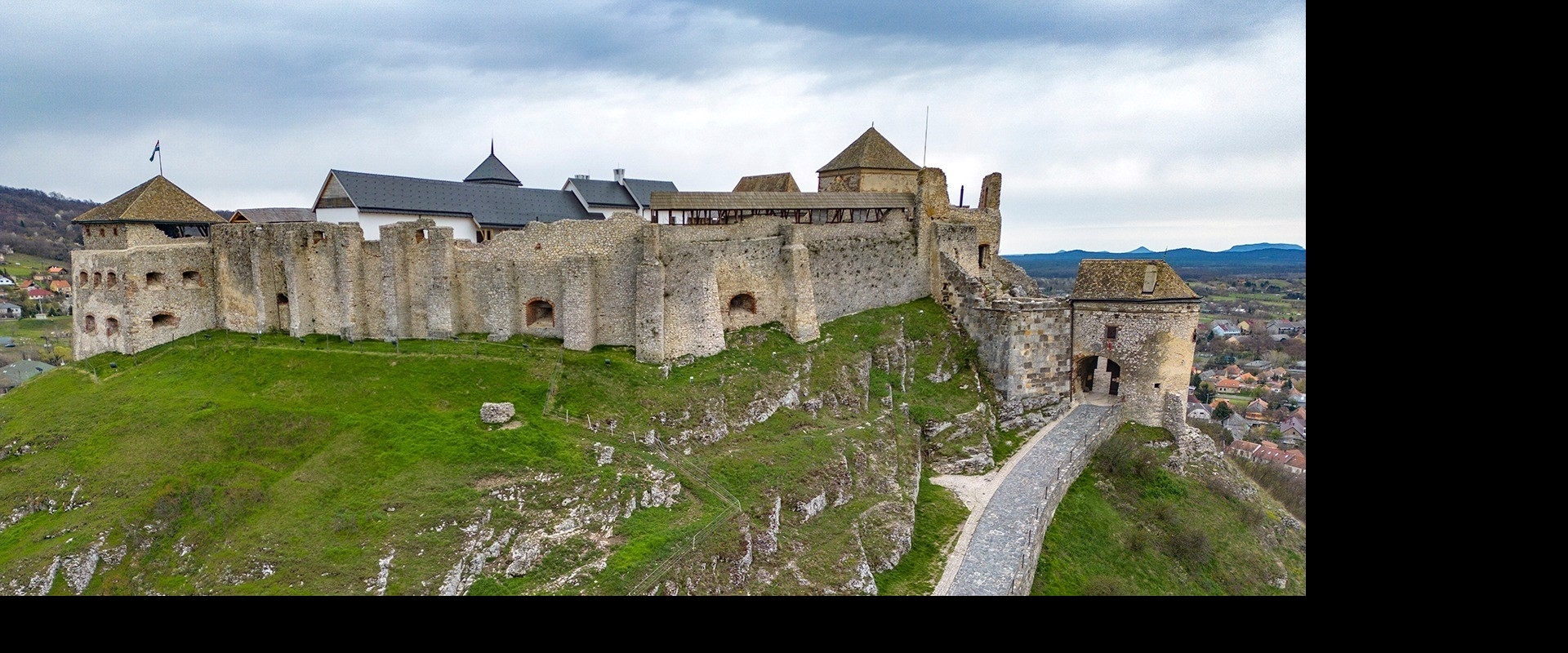
The castle was built on cliffs (lime stone).
It sweeps toward north and south.
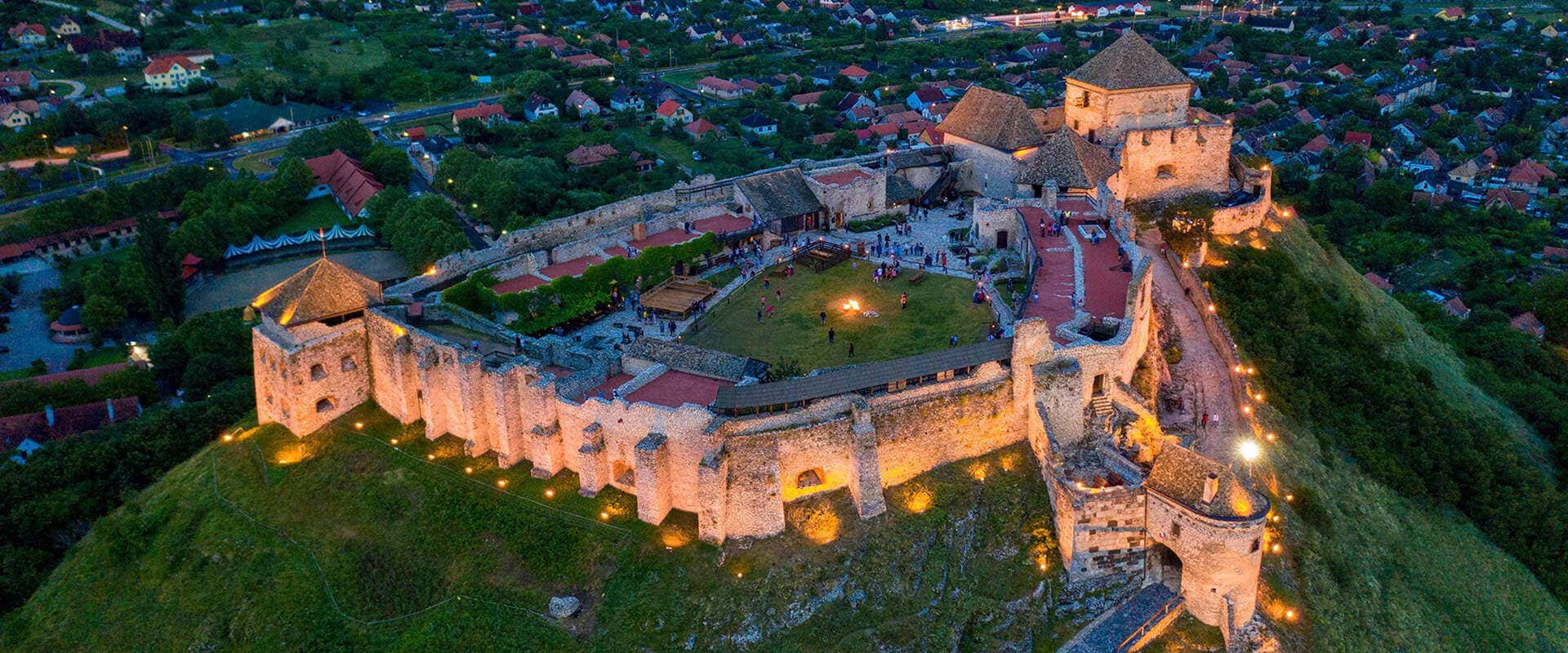
It has a length of 130 metres, and it’s extreme width is 80 metres.
One of Hungary’s largest and best preserved medieval castles is Sümeg. The only fortress in Hungary that the Turks were unable to capture.
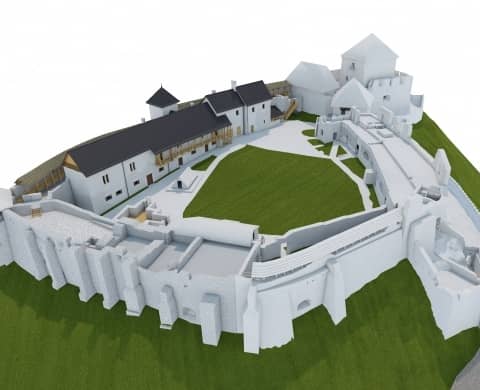
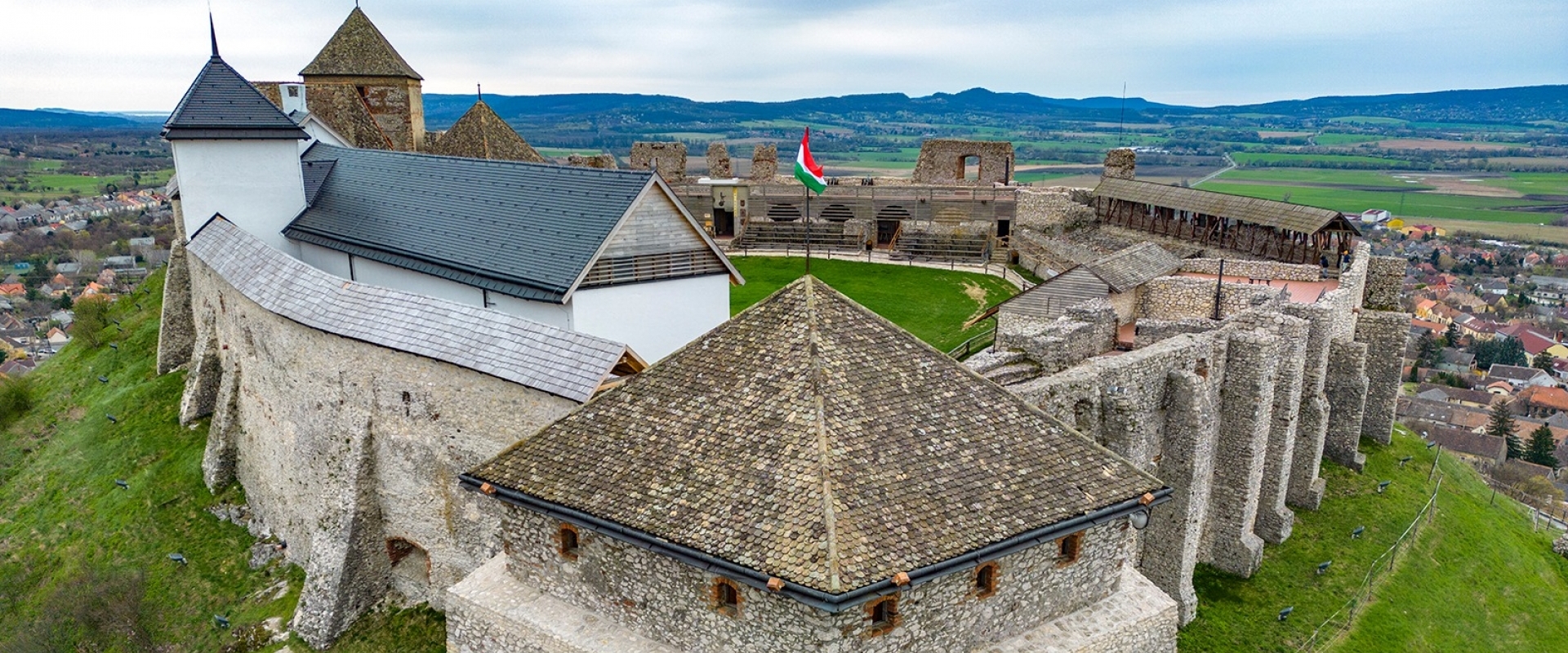
The castle has three parts:
the citadell
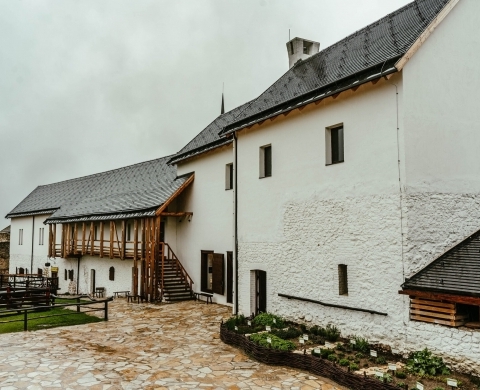
the inner castle (the renaissance chapel, the palace and some living and agricultural rooms)
the outer castle
The citadell was built 800 years ago (at first from tree, than from limestone). From this time the castle was enlarged with the palace, the renaissance chapel, some living and agricultural rooms. The walls was strengthened with bastions (Like that the inner and outer gatehouse). The circumvallation was finished in the 18th century.
The golden age of the castle began in the 16th century. At this time the castle and the holding were in good state. After the Turkish occupation of Veszprem in 1552 Sümeg became the residence of the bishops for 200 years.
As the private property of the bishop the castle belonged to the second line of the border castles in Transdanubia. At this time began the development in the castle and the town too: The Parish church and the Baroque Episcopal Palace was build and the Franciscan church and Monastry was restored. A lot of houses from limestone were built at this time.
In 1664 the retreating Turkish army besieged the town. People were not able to hold the townwalls so they were evacuated into the castle. The Turks set the town on fire, because of the strong wind the fire catch on into the castle and burns it.
Despite of the repeating Turkish attacks and the above mentioned siege, Sümeg remained the strongly defended border castle of the Balaton-uplands, remaining in Hungarian hands when the town around the castlehill and it’s surroundings were under Turkish authority.
In the 18th century the town played a very important part in the war of independence by Rákóczi. Here were the sittings of the countys and the ordnance supplies of the Hungarian troops were here and from here carriaged till 1709. In 1709 the castle were delivered into the hands of the imperial troops by treason and in 1713 under colour of military exercise it was burnt down.
Since that time the castle without roof and owner-like many other Hungarian castles and fortresses has been given to slow and sorrowful destruction.
The construction of the ruins started in 1954, lasted for ten years. The work executed on the base of Tibor Koppány’s plan by the National Committee for the Protection of Historic Monuments. It was fully renovated: the walls are once again stable and safe for visitors.
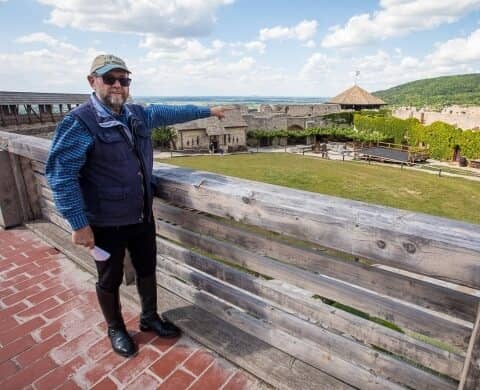
From the year 1990 the Papp family rents the castle from the state and they are committed to guarantee the preservation of the castle as a cultural heritage.